TV Mounting Cost: What Local Pros May Charge
· 6 min read · Hire4Service Team
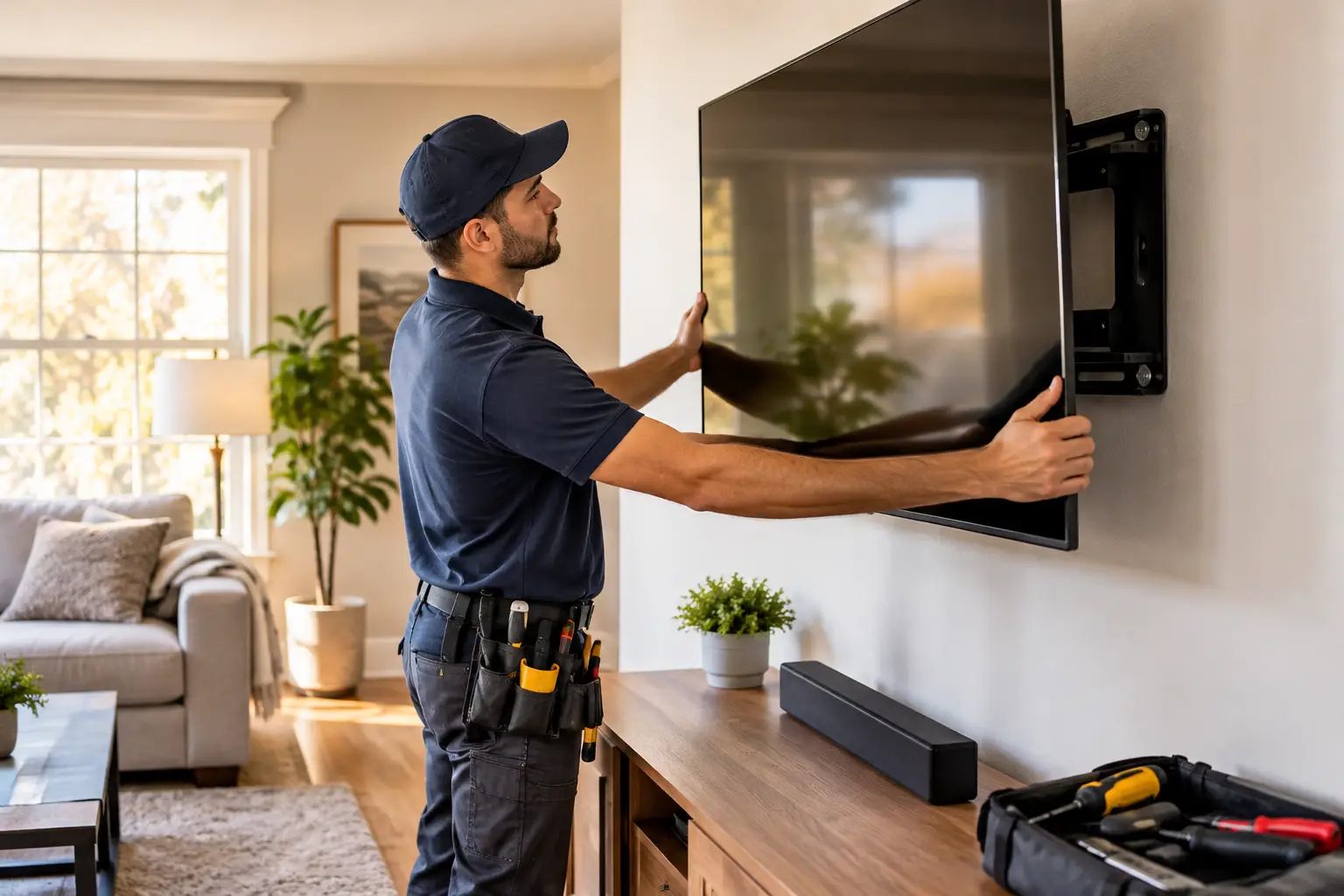
A new TV can look great in the box and still become a weekend headache once you face the wall. The TV mounting cost is not just about putting a bracket up. It can include finding studs, choosing the right mount, hiding cords, working around fireplaces, and making sure the screen is level and secure.
For a straightforward job, many homeowners pay less than they expect. For a large TV on a difficult wall with hidden wiring, the number can climb quickly. The best move is to know what changes the price before you ask people nearby for quotes.
What Drives TV Mounting Cost?
Most TV mounting jobs begin with the same basic work: measuring the viewing height, locating solid mounting points, attaching the bracket, lifting the TV, and checking that everything is level. A simple install on a standard drywall wall is usually the lowest-cost scenario.
The final price changes when the job requires more time, materials, tools, or a second set of hands. A 32-inch bedroom TV mounted on an open wall is very different from an 85-inch living room TV mounted above a stone fireplace. Both are called TV mounting, but the labor and risk are not the same.
Labor rates also vary by city, provider experience, and how quickly you need the work done. A same-day request, evening appointment, or weekend job may cost more than a flexible weekday booking. Ask what is included in the quote so a low starting price does not turn into surprise add-ons later.
TV Mounting Cost by Job Type
As a broad planning range, a basic installation can often run about $75 to $200 for labor, depending on your city and the size of the TV. More involved mounting jobs may fall around $250 to $600 or more when they include difficult wall materials, wire concealment, outlet work, large screens, or custom placement. These are planning ranges, not fixed prices, and local quotes can vary widely.
A basic job generally means the TV is going onto drywall with accessible wood studs, the customer already has a compatible mount, and cords will remain visible or use a simple surface cover. It is the fastest type of installation because the wall is easy to work with and there are fewer decisions to make on site.
A more complex job might involve mounting over a fireplace, installing on brick, concrete, tile, plaster, or metal studs, or running cables through the wall. It may also require a recessed media box, a new nearby outlet, longer HDMI cables, a soundbar bracket, or a second technician for a heavier screen. Each item may be reasonable on its own, but together they change the total.
Your Wall Matters More Than You Think
Before requesting help, take a close look at the wall where the TV will go. Drywall over wood studs is common and usually the most straightforward. Brick and concrete need different drill bits and anchors. Tile can crack if it is drilled incorrectly. Plaster walls can hide surprises behind the surface, while metal studs may need specialized mounting hardware.
Fireplace walls deserve extra attention. A TV above a fireplace can be a clean-looking choice, but the install may involve heat concerns, masonry, a high viewing angle, and limited room for cables. If the mantel is high, you may need a tilting or full-motion mount to improve the viewing angle. That mount can cost more than a fixed bracket, and it can take longer to install properly.
Tell the provider what the wall is made of if you know. A clear photo of the wall, fireplace, existing outlet, and TV area can help local pros give a more useful estimate before they arrive.
The mount itself is a separate decision
Some installation quotes include a mount, while others cover labor only. Do not assume it is included. Fixed mounts are usually the simplest option and hold the TV close to the wall. Tilting mounts are useful when the screen will sit above eye level. Full-motion mounts let you pull out, swivel, and angle the TV, but they require more hardware and more careful installation.
Choose a mount rated for your TV's size and weight, and confirm that its mounting pattern fits the back of the TV. A bargain mount that does not match your screen can cause delays or force a last-minute replacement.
Wiring and Add-Ons Can Change the Quote
Visible cords are often the line between a basic install and a more finished setup. Some people are fine with a neat cord cover. Others want power and HDMI cables hidden inside the wall. That cleaner look can add labor, materials, and sometimes additional electrical work.
Think through the full setup before getting a quote. Will you connect a streaming device, game console, cable box, antenna, soundbar, or wall-mounted speakers? Will those devices sit below the TV, in a cabinet, or in another room? Longer cable runs and concealed equipment can take more planning than the actual TV mount.
If you want a soundbar attached beneath the TV, ask about it upfront. The same goes for removing an old mount, patching old holes, mounting on an articulating arm, or relocating the TV from one room to another. Small details help a provider arrive with the right tools and hardware instead of revising the job after arrival.
Get a Quote That Is Easy to Compare
The cheapest quote is not always the best value, especially if one provider assumes a simple drywall job and another accounts for your brick wall, soundbar, and cord concealment. Give each local provider the same information so you can compare the answers fairly.
When you reach out, include the TV size and model if available, the type of wall, the mount you have or need, and whether you want wires hidden. Mention the desired location and share photos when possible. You can also ask whether the quote includes mounting hardware, what happens if the wall needs different anchors, and whether a second person is needed for the lift.
If a quote seems unusually low, ask what is excluded. If a quote seems high, ask which part of the job is adding cost. A clear conversation usually gets you closer to a fair price than guessing from a single advertised starting rate.
Is DIY Worth It?
DIY mounting can save labor money if you have the right tools, a compatible mount, a helper, and confidence locating studs. It is a reasonable option for some standard drywall installations. Still, a TV is heavy, wall materials are not always obvious, and a poorly placed bracket can leave damaged drywall or an expensive screen on the floor.
Hiring help can make sense when the TV is large, the wall is masonry or tile, cords need to be hidden, or the mount has a complicated full-motion arm. It can also be worth it when you simply want the job finished quickly and cleanly. The goal is not to pay for more than you need. It is to match the help to the wall and setup you actually have.
Find Nearby Help for the Job
Local service providers often have different strengths. One may focus on simple TV installs, while another is better equipped for fireplace walls, wire management, or home theater setups. Look for listings that describe the type of mounting work offered, then contact a few people nearby with the same job details.
On Hire 4 Service, you can browse local help within your area and connect directly about the scope of your project. Keep the conversation practical: send photos, explain what you want, and ask for a complete estimate before scheduling.
A well-mounted TV should feel like it belongs in the room, not like a project waiting for another trip to the hardware store. A few clear details at the start can help you find the right local help, control the TV mounting cost, and enjoy movie night sooner.
Looking for help near you, or ready to offer your own services?